
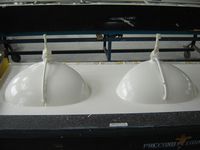
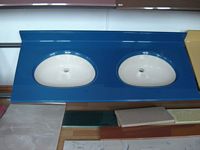
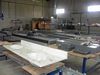
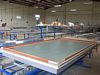
Your molds are the most important tools in your cultured marble factory. Buy molds that you know gives you the best opportunity to make you money; Sinks, Bathtubs, Shower Pans, Wall Panels, and accessories. All the molds can be used to produce marble, onyx, granite and the other formulas seen in the "Photos" page. |
|
Click categories below to see mold drawings :  All
Purpose (No Bowl) Molds
Modular (Speed) Molds Floating Bowl Molds Drop-In & Vessel Bowl Molds Undermount Bowl Molds Pedestal Sink Molds Kitchen Sink Molds Bar Sink Molds Bathtub Molds Shower Pan Molds Wall Panel Molds Window Sill Molds Column Molds Trim Molds Soap/Shampoo Molds Misc. Accessories Molds    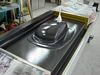  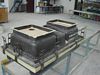 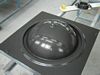 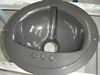      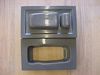 
     |
When
setting up a new cultured marble factory, it is crucial that you
start with a large enough package of molds to produce a sufficient
quantity of marble per month to pay your overhead and realize a profit
at the end of the month. Basically, the more molds you have the more
‘pounds-per-day’ you will be able to produce so
it’s important not to invest in a few overpriced molds but
instead buy a larger quantity of industry standard molds from someone
you trust will supply you with the best in the industry. Most in this
industry gauges their production by how many pounds per day of marble
they produce. If you want more info on this, give me a call. You
can even calculate your mold cost for each piece of marble you produce
on it. Let’s keep it simple and say a mold cost you
$5,000
and you poured that mold 5,000 times. Each product
you
poured only had $1.00 of mold expense in it. In training,
you’ll learn how to save several times that amount in
material
cost alone, without figuring saved labor costs with the equipment
we’ll discuss in more detail on the Equipment page. The
glossy finish on the molds is a gel coat that is produced by one of the
most recognized gel coat manufacturers in the world. Under the gel coat
are several layers of reinforced fiber compounds that are backed up or
supported by wood and/or metal. Since marble weighs eight pounds per
square foot at .75 inches thick, a strong base is critical. The wood
that is used is “Medium Density Fiberboard”, or
MDF. This
is not a cheap ‘particle board’ kind of material
that is
used for crating. MDF is very strong, maintains a uniform density, is
machinable, and will accept a wide range of sealers, primers, and
coatings such as the polyester resins used to make the molds. The
density is about 40 pounds per cubic feet and this is why you find MDF
to be quite heavy. The moisture content is between 5-8%, so with such a
low moisture content, it is very rigid and will not warp under heavy
weight like natural wood and honey comb often does and is much stronger
than natural wood of the same thickness. Medium Density Fiberboard is a
cultured and improved wood much like cultured marble is an improvement
over natural marble. Floating Bowls: There are over 50 different styles of floating bowl molds available and when you include drop in bowls, undermount bowls, bar sinks, and kitchen sinks molds, there are well over a 100. There are oval, square, rectangle, octagonal, shell shaped, scallop and other designs and obviously you’re not going to start with all of them but it’s a good idea to offer your customers some choices. It’s recommended to buy your floating bowls in pairs because you will need to have two bowls of the same style to make a double bowl vanity top. Drop In Bowls: These can be a big seller where your customer has already chosen an alternative (tile, laminate, natural marble) to your cultured product for their countertop. That is fine. You’re not going to sell ‘everybody’ your one-piece, seamless vanity top but if you have a couple of unique drop-in bowl styles, you can sell them the sink. Unlike the all-one-piece vanity top where you need two of the same floating bowls to make a double bowl counter top, you can make a double bowl drop-in sink installation using one drop-in sink mold because you can pour it, let it cure, pop it off and pour the second one. Undermount: Many people prefer an ‘under mount’ sink because you don’t have an unsightly silicone line around the bowl like you do with a drop-in. An Undermount sink is installed from the underside so it does not meet the counter top on the top side. An undermount sink makes a nice clean appearance on the surface of the counter top and is easier and faster to clean as you can simply wipe the counter top off into the sink. This is one of the reasons you see under mount bowls in many hotels. If a hotel saves one minute cleaning the bathroom in every room, X a 200 room hotel X 365 days a year, that’s a lot of labor cost savings. Kitchen Sinks: There is huge potential in manufacturing solid surface kitchen sinks and there are many styles to choose from. There are single bowl, double bowl and triple bowl molds. Go to a kitchen / bath shop and see some of the designs they offer and the prices they are asking. You’ll want to compete, so you’ll also want to offer some choices. Bar Sinks: You are in the business to make money so don’t overlook areas around a home or commercial business for areas to sell your product. Many homes will have a small bar or single bowl kitchen sink elsewhere in the home. It may be a bar in the family room, a sink a mud room inside the back door or in the laundry room. If you’re doing a take-off from a set of floor plans, look for areas like this as they may also require a sizeable counter top to go with that small sink. These molds come in a variety of sizes and are drop-in and/or floating bowl molds. Wall Paneling: Your wall panel molds will truly be the work-horse in your factory as they are what will produce all of your flat pieces, whether it be wall paneling, shower surrounds, table tops, bathtub decks, steps, desk tops, large “L” shaped counter tops etc. Anything flat will be made on the wall panel mold. They are available in a variety of sizes but it’s best to start with the largest because you can always use divider bars to make smaller pieces on a large mold but you can’t make a piece of marble any larger than the molds is. If you have an installation larger than the mold, it will have to be made in two pieces and then you’ll have a seam. “Seamless” is going to be one of your big selling points so eliminate a seam wherever you can. Shower surrounds should be a big part of your business and are an easy sell. You can offer your customer a grout-free marble shower surround that can be installed in a single day and has no grout lines where mold and mildew accumulate. Flooring: Some of your customers may want flooring to match the other products they are purchasing from you for in their bathroom and if so, always make it with a textured finish and again, try to make it seamless. Keep in mind that natural marble and granite have a harder surface and will withstand heavier traffic but your product will be suitable for bathrooms. Bathtubs and Shower Pans: Bathtubs and shower pans are great money makers! Do a market survey in your area and compare local prices to what it will cost you to produce them. If you weren’t considering making ‘tubs and pans’, you should be because they are very easy to produce and you can be very competitive in this market. (Ask for the Material Cost Calculator). Also, compare quality. I have seen markets sell cheap quality imported bathtubs for 6 to 10 times my material costs so you can certainly be competitive in such markets. I’ve touched on the major money making molds but don’t overlook the little molds that are necessary to finish the job and accessory items that people just simply want to have. Some of these include the soap dishes, trims molding, window sills, shower seats, bathroom shelves, etc. These small items require a small amount of material and often no more than some left over material. Some of these items can give you a higher per-pound/per-kg return than some of the larger products you’ll manufacture. Don’t be overly concerned about building your mold package now because we’ll spend a great deal of time (and maybe some evenings) talking about molds during your training class. You’ll always be able to make final changes to your mold selection after you’ve attended training. |
 |
 |